
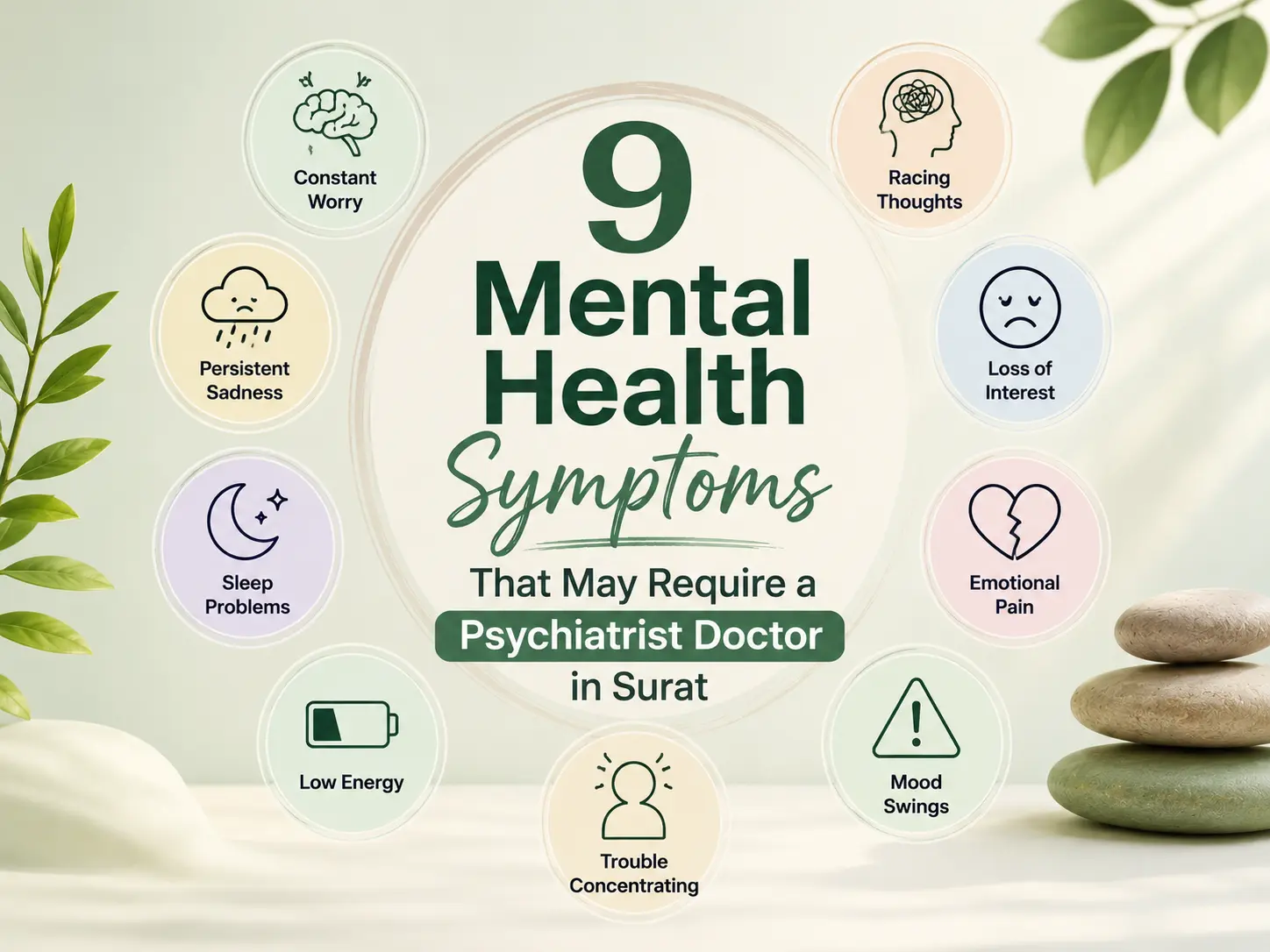
9 Mental Health Symptoms That May Require a Psychiatrist Doctor in Surat
Mental health is an important part of overall well-being, but many people ignore emotional struggles until they begin affecting daily life. Persistent stress, sadness, or anxiety that impacts sleep, relationships, or work may be signs that you need support.
Seeking help from a Psychiatrist Doctor in Surat is not a sign of weakness. At Dr. Nirzaree Parikh’s clinic, compassionate care and guidance are available to help individuals improve their emotional well-being and quality of life.
Below are nine important mental health symptoms that should never be ignored.
Why Mental Health Symptoms Often Go Unnoticed
Unlike physical illnesses, emotional struggles are not always visible. A person may continue going to work, managing responsibilities, and appearing fine on the outside while silently feeling overwhelmed inside.
Many people normalize their symptoms by saying:
- “I’m just stressed.”
- “Things will get better on their own.”
- “Everyone feels this way sometimes.”
While temporary emotional ups and downs are normal, persistent symptoms deserve attention and care.
1. Constant Anxiety and Overthinking
Everyone worries occasionally, but constant anxiety can feel very different. You may find yourself thinking about the same problems repeatedly or imagining worst-case scenarios even when there is no immediate reason to worry.
Overthinking can make it difficult to relax and enjoy everyday life. It often affects concentration, sleep, and relationships.
When Anxiety Becomes More Than Stress
If your mind rarely feels calm and worry has become a daily companion, it may be time to speak with a Psychiatrist Doctor in Surat. Anxiety that continues for weeks or months can affect both emotional and physical health.
How Constant Anxiety Affects Daily Life
Living with constant anxiety can be emotionally and physically exhausting. Simple decisions may feel overwhelming, and you may find it difficult to focus on work, enjoy time with loved ones, or relax even during peaceful moments. Over time, persistent worry can affect self-confidence, productivity, and overall well-being, making it important to recognize these signs and seek support when needed.
2. Persistent Sadness or Loss of Interest
Feeling sad after a difficult event is natural. However, if sadness, emptiness, or hopelessness continue for a long time, it may be a sign of depression.
Many people also lose interest in activities they once enjoyed. Hobbies, social gatherings, and spending time with loved ones may no longer bring the same sense of happiness.
Depression Doesn't Always Look Like Crying
Some people with depression continue smiling and fulfilling responsibilities while silently feeling emotionally exhausted. They may experience a lack of motivation, numbness, or difficulty finding joy in everyday life. Persistent sadness should never be ignored because early support can make a significant difference.
How Depression Affects Daily Life
Depression can make even simple tasks feel overwhelming. You may struggle to get out of bed, find it difficult to concentrate, or lose motivation to do things that once felt easy. Over time, these feelings can affect relationships, work performance, and overall quality of life. Recognizing these changes early and seeking support can make recovery and emotional healing easier.
3. Sleep Problems That Don't Improve
Mental health and sleep are closely connected. Stress, anxiety, and depression can all affect sleep patterns.
Some people struggle to:
- Fall asleep
- Stay asleep
- Wake up frequently
- Feel rested even after sleeping
Poor sleep can also worsen emotional symptoms and make daily challenges feel even more difficult.
Why Sleep Matters
Good sleep is essential for emotional balance. If sleep problems continue for a long time, seeking support from a Psychiatrist Doctor in Surat may help identify the underlying cause.
4. Frequent Mood Swings or Irritability
Mental health concerns do not always appear as sadness. Some people become increasingly irritable, emotionally sensitive, or easily frustrated. Small situations may suddenly feel overwhelming, leading to emotional reactions that seem difficult to control.
Emotional Exhaustion Can Increase Irritability
When the mind is under constant stress, even minor challenges can feel much bigger than they actually are. Persistent mood changes may be a sign that your emotional well-being needs attention.
5. Difficulty Concentrating or Making Decisions
Mental health struggles can affect the way we think and process information.
You may notice:
- Difficulty concentrating
- Forgetting things more often
- Feeling mentally exhausted
- Struggling to complete tasks
- Difficulty making simple decisions
These symptoms are often overlooked, but they can significantly affect work, studies, and daily life.
Why Mental Health Affects Focus
When the mind is overwhelmed by stress or anxiety, it becomes difficult to focus on the present moment. Addressing emotional concerns often improves concentration and mental clarity.
6. Feeling Constantly Tired or Emotionally Drained
Many people experiencing mental health concerns describe feeling tired all the time, even after resting.
Emotional exhaustion can make everyday tasks feel overwhelming. Simple activities may require much more effort than usual.
Emotional Fatigue Is Real
Constant tiredness is not always caused by physical health problems. Sometimes, the mind becomes exhausted from carrying stress, worry, or emotional pain for a long time.
If you feel emotionally drained most days, it may be time to seek support.
7. Panic Attacks or Intense Fear
Panic attacks can be frightening and often happen unexpectedly.
Symptoms may include:
- Racing heartbeat
- Sweating
- Shortness of breath
- Chest tightness
- Dizziness
- Feeling like something terrible is about to happen
Many people initially think they are experiencing a serious physical illness.
Panic Attacks Can Be Treated
Panic attacks often improve with the right support and treatment. Seeking help from a Psychiatrist Doctor in Surat can help you better understand your symptoms and manage them effectively.
8. Withdrawing from Family and Friends
Mental health struggles often affect relationships.
You may begin:
- Avoiding social gatherings
- Ignoring calls or messages
- Spending more time alone
- Losing interest in connecting with others
Many people isolate themselves because they feel overwhelmed or believe that others won’t understand their struggles.
Human Connection Matters
Supportive relationships play an important role in emotional well-being. When someone starts withdrawing from loved ones, it may be a sign that they need additional support.
9. Feeling Hopeless or Unable to Cope
One of the most important signs to watch for is feeling emotionally overwhelmed for an extended period.
You may feel:
- Trapped
- Helpless
- Unable to manage responsibilities
- Emotionally disconnected
- Like things will never improve
These feelings should never be ignored.
You Don't Have to Carry Everything Alone
Seeking support can provide relief, understanding, and practical strategies to help you feel more balanced and hopeful again.
How Mental Health Symptoms Affect Daily Life
Mental health concerns can affect much more than emotions.
They can influence:
- Physical health
- Relationships
- Work performance
- Academic performance
- Confidence
- Sleep quality
- Decision-making
The longer symptoms continue, the greater their impact may become.
Why Early Support Matters
Seeking help early can make a significant difference.
Early support can help:
- Reduce emotional distress
- Improve relationships
- Improve sleep
- Increase self-confidence
- Develop healthy coping skills
- Prevent symptoms from becoming more severe
You do not have to wait until you reach a crisis point before asking for help.
How a Psychiatrist Doctor in Surat Can Help
A Psychiatrist Doctor in Surat can help identify the causes of emotional struggles and create a treatment plan based on individual needs.
Treatment may include:
- Understanding emotional triggers
- Managing anxiety and stress
- Treating depression and mood disorders
- Addressing sleep concerns
- Building healthier coping strategies
- Medication when clinically appropriate
At Dr. Nirzaree Parikh’s clinic, mental health care focuses on providing compassionate, personalized support that helps individuals and families improve their emotional well-being.
Conclusion
Mental health symptoms should never be ignored. Persistent anxiety, sadness, sleep problems, emotional exhaustion, panic attacks, social withdrawal, and feelings of hopelessness can all be signs that your mind needs support.
Recognizing these symptoms early and seeking help from a Psychiatrist Doctor in Surat can make a meaningful difference in your emotional well-being and quality of life.
At Dr. Nirzaree Parikh’s clinic, compassionate mental health care is available to help individuals understand their struggles, build resilience, and move toward a healthier and more balanced future.
Frequently Asked Questions
1. When should I visit a Psychiatrist Doctor in Surat?
You should consider visiting a Psychiatrist Doctor in Surat if stress, anxiety, sadness, sleep problems, mood changes, or emotional difficulties are affecting your daily life, relationships, or work.
2. What symptoms indicate that I may need mental health treatment?
Common signs include persistent anxiety, overthinking, depression, panic attacks, emotional exhaustion, difficulty sleeping, mood swings, and feeling unable to cope with daily responsibilities.
3. Can a Psychiatrist Doctor in Surat help with anxiety and depression?
Yes. A Psychiatrist Doctor in Surat can diagnose anxiety and depression, identify underlying causes, and provide personalized treatment to improve emotional well-being.
4. How do I know if my stress has become a mental health concern?
If stress continues for weeks, affects your sleep, concentration, relationships, or causes physical symptoms like fatigue and irritability, it may be time to seek professional support.
5. Do I need to see a psychiatrist if I am having panic attacks?
Yes. Recurrent panic attacks, racing thoughts, chest tightness, or intense fear should not be ignored. A Psychiatrist Doctor in Surat can help you understand and manage these symptoms effectively.
6. Can mental health problems cause physical symptoms?
Yes. Mental health conditions can lead to headaches, fatigue, poor sleep, digestive issues, muscle tension, and changes in appetite or energy levels.