
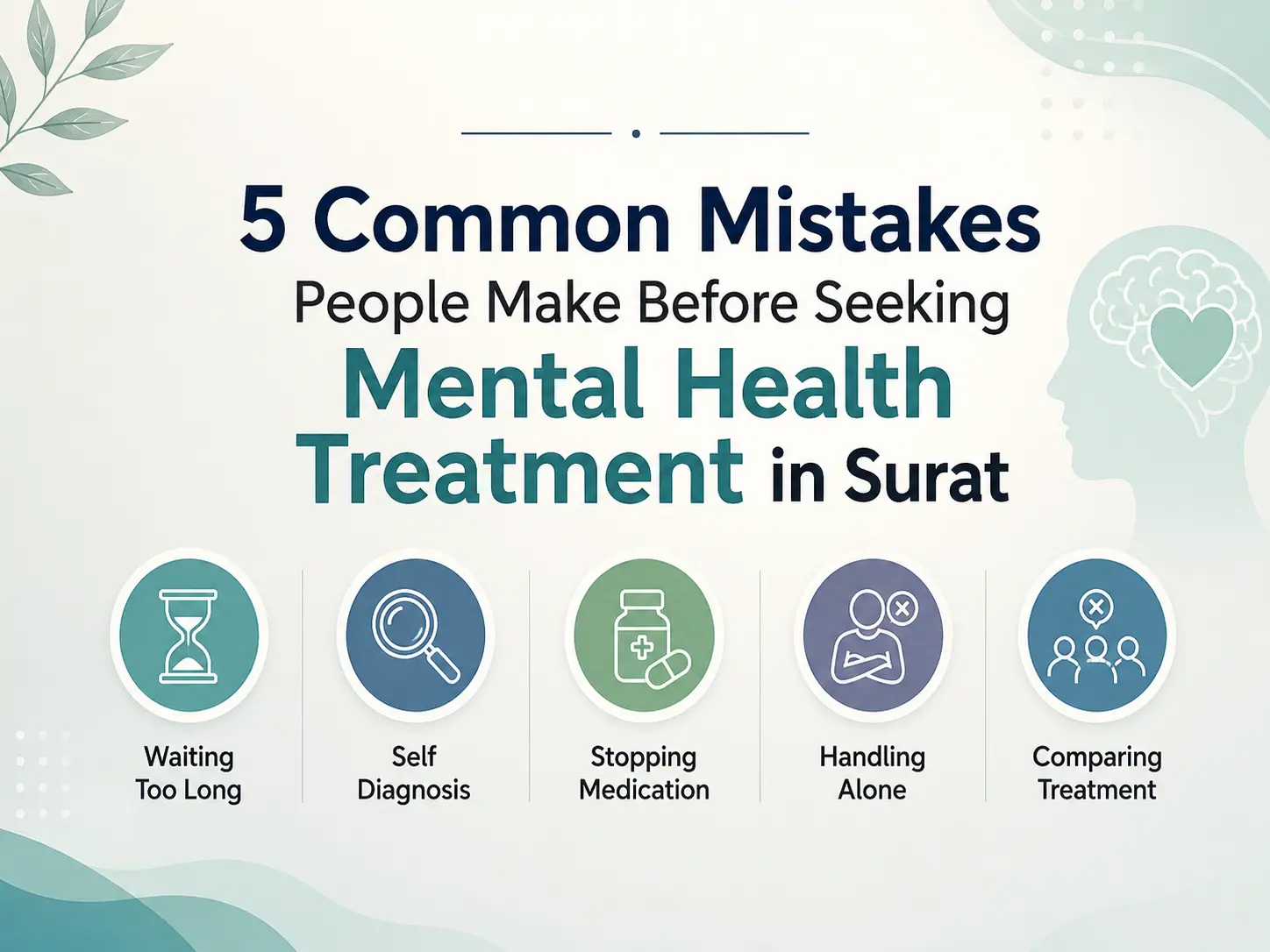
5 Common Mistakes People Make Before Seeking Mental Health Treatment in Surat
Mental health struggles don’t always arrive suddenly. Sometimes they begin with constant overthinking, poor sleep, low mood, irritability, anxiety, or simply feeling emotionally drained. Many people notice these changes but continue to ignore them because they believe things will eventually get better on their own.
Seeking Mental Health Treatment in Surat doesn’t mean something is seriously wrong with you. It simply means you’re taking your emotional well-being seriously. Professional support can help you understand what you’re experiencing and find healthier ways to manage it.
However, many people make a few common mistakes before reaching out for help. Understanding these mistakes can make the process easier and help you approach treatment with a more open and informed mindset.
1. Waiting Until Things Become Unmanageable
One of the most common mistakes is waiting until symptoms become extremely difficult to handle.
You may tell yourself, “I’ll get help if things get worse.” Meanwhile, anxiety, sadness, stress, or sleep problems may continue affecting your everyday life. You might still be working, studying, taking care of your family, and completing responsibilities, so it can feel like your struggles aren’t serious enough to deserve attention.
But you don’t have to wait for a crisis.
If emotional difficulties regularly affect your sleep, relationships, concentration, work, studies, or daily routine, talking to a professional may help.
You Don't Need to Wait for a Crisis
Early support can help you understand your symptoms before they become more disruptive. Mental Health Treatment in Surat can provide professional guidance based on your individual concerns rather than waiting until everything feels overwhelming.
You also don’t need to know exactly what diagnosis you have. Explaining what you’re experiencing is enough. A qualified professional can evaluate your symptoms and guide you from there.
2. Trying to Diagnose Yourself Online
The internet has made mental health information easier to access, but searching symptoms online can sometimes create more confusion than clarity.
For example, difficulty sleeping can have many possible causes. Similarly, overthinking can occur because of stress, anxiety, difficult experiences, or temporary life circumstances. Reading several symptom lists and immediately assuming you have a particular disorder can increase fear and anxiety.
Online Information Is Not a Personal Assessment
Online resources can help you learn basic information, but they cannot understand your complete personal history or assess your situation individually.
Instead of trying to diagnose yourself, write down what you’ve actually been experiencing. Note when the symptoms started, how frequently they occur, and how they affect your daily life. This can make your consultation much more useful.
3. Changing or Stopping Medication Without Professional Guidance
Another common mistake is changing psychiatric medication based on how you’re feeling at a particular moment.
Someone may stop taking medication because they feel better. Another person may change the dose because they feel it isn’t working quickly enough. However, you should always discuss medication decisions with the treating professional.
Mental health treatment often involves monitoring symptoms, understanding side effects, and making adjustments when appropriate.
Treatment Takes Time
Not every treatment works in the same way for every person. Your response may depend on several individual factors.
If you’re experiencing side effects or feel that your treatment isn’t helping, discuss your concerns with your psychiatrist instead of making changes on your own. This is an important part of safe and effective Mental Health Treatment in Surat.
4. Believing You Should Handle Everything Alone
Many people still feel that asking for mental health support means they aren’t strong enough to manage their own problems.
You may be dealing with work pressure, family responsibilities, relationship difficulties, financial concerns, or personal struggles while trying to appear completely fine to everyone around you.
But being strong doesn’t mean carrying everything alone.
Asking for Help Is Not Weakness
Talking to a mental health professional is a positive step toward understanding yourself and taking better care of your emotional health.
You don’t need to wait until you completely lose control. Even if you’re simply feeling “not like yourself,” professional guidance can help you understand what’s happening and decide what support may be appropriate.
5. Choosing Treatment Only Because It Worked for Someone Else
A friend or family member may tell you about a particular medication, therapy, or treatment that worked well for them. It’s understandable to think that the same approach might work for you.
However, mental health treatment isn’t one-size-fits-all.
Two people can experience similar symptoms but have completely different backgrounds, medical histories, stressors, lifestyles, and treatment needs.
Your Mental Health Journey Is Personal
A professional assessment allows your concerns to be understood individually. The goal of Mental Health Treatment in Surat should be to identify an approach that fits your specific needs rather than simply copying someone else’s experience.
What works for one person may not necessarily be suitable for another.
How Can You Prepare for Mental Health Treatment in Surat?
You don’t need to prepare a perfect explanation before your first consultation. Simply be honest about what you’ve been experiencing.
Before your appointment, it may help to make a few notes about:
- Your main symptoms
- When they started
- How frequently they occur
- Changes in sleep or appetite
- Major recent life changes
- Current medications
- How your symptoms affect daily activities
- Any concerns you want to discuss
Don’t worry if you don’t know how to explain everything. A professional can guide the conversation.
When Should You Consider Professional Support?
There isn’t one specific moment when everyone should seek mental health care. However, professional support may be worth considering when emotional or psychological symptoms persist, become difficult to manage, or interfere with everyday life.
Some signs may include:
- Constant anxiety or excessive worry
- Persistent sadness or hopelessness
- Frequent panic or fear
- Significant mood changes
- Ongoing sleep difficulties
- Loss of interest in usual activities
- Difficulty concentrating
- Emotional exhaustion
- Feeling unable to cope
- Problems with relationships or daily responsibilities
Having one of these symptoms doesn’t automatically mean you have a mental health disorder. A professional assessment can help you understand what may be happening.
Why the Right Mental Health Professional Matters
Choosing a professional you feel comfortable talking to can make a meaningful difference. You should feel heard, respected, and able to discuss your concerns without fear of judgment.
Dr. Nirzaree Parikh provides psychiatric care in Surat, with treatment and support for various mental health concerns. Her approach focuses on understanding individual needs and providing appropriate professional guidance.
When considering Mental Health Treatment in Surat, focus on finding care that makes you feel comfortable discussing your experiences and asking questions about your treatment.
Final Thoughts
Your mental health deserves attention just like your physical health. You don’t have to wait until everything feels impossible before asking for support.
Avoid self-diagnosing everything online, changing medication without guidance, comparing your treatment with someone else’s, or believing that you have to handle every struggle alone.
If you’re considering Mental Health Treatment in Surat, taking the first step can simply mean having an honest conversation with a qualified professional. With the right support, patience, and care, you can work toward better emotional balance and a healthier quality of life.
Frequently Asked Questions
1. When should I consider Mental Health Treatment in Surat?
You may consider professional support when anxiety, sadness, stress, sleep problems, mood changes, or other emotional concerns persist or begin affecting your daily life.
2. Do I need a diagnosis before visiting a psychiatrist?
No. You don’t need to diagnose yourself before seeking help. A psychiatrist can evaluate your symptoms, understand your history, and guide you appropriately.
3. Can overthinking be a reason to seek mental health support?
Yes. Occasional overthinking is common, but persistent thoughts that interfere with sleep, concentration, relationships, or daily activities may be worth discussing with a professional.
4. Is psychiatric treatment only about medication?
No. Depending on your individual needs, treatment may involve psychiatric evaluation, medication when appropriate, therapy or counseling support, lifestyle guidance, and follow-up care.
5. Can mental health treatment help with sleep problems?
Sleep difficulties can have different causes. If sleep problems are connected with anxiety, depression, stress, or another mental health concern, professional assessment can help identify suitable support.
6. How long does mental health treatment take?
There is no fixed timeline. Treatment duration depends on the individual’s concerns, symptoms, response to treatment, and overall needs. Regular follow-ups help monitor progress.